A few weeks back, one of my guests asked me about the Elephant Transit Home after seeing some mixed reviews online. Some people love it. Others have concerns. And honestly, both sides have a point.
But instead of brushing it off or giving the usual tour guide speech, I want to be completely transparent about what it actually is, what you will see there, and why I still choose to include it in my safaris even though it is complicated.
What ETH actually is, and what it is not
First things first. This is not a zoo. It is not some tourist attraction where you get to pet baby elephants or take selfies next to them. That is not what happens here.
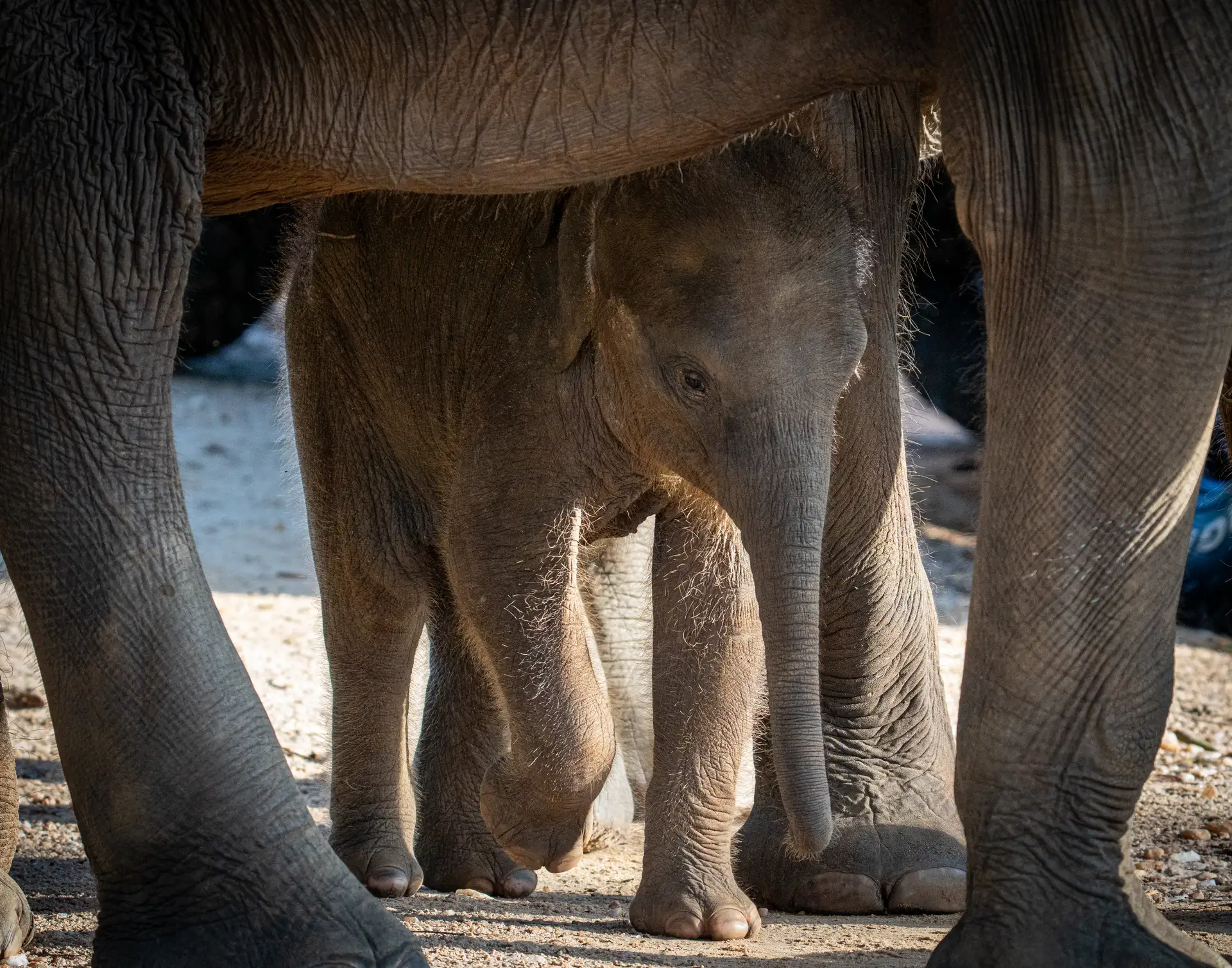
The Elephant Transit Home is run by the Sri Lankan Department of Wildlife Conservation. It is a proper rehabilitation centre for orphaned and injured elephant calves rescued from the wild. The entire purpose is to prepare them to go back to the forest when they are ready. Not to keep them forever. Not to chain them up. Not to train them for performances.
Just back to where they belong.
You do not get to touch them. You do not get to feed them. You watch from a distance during feeding time, which lasts around 15 to 20 minutes. That is it. The rest of the day they are free in the forest next to Udawalawe National Park, doing what young elephants do.
Learning to be wild again.
What you might see, and why it happens
I have seen the reviews too. People mentioning they saw a stick being used and felt confused about it. I understand that reaction. It makes sense to wonder what is going on if you do not know the full picture.
Here is the reality. When feeding time comes, these young elephants get excited. And not in a gentle, calm way. They start pushing each other around, headbutting, trying to knock over the smaller ones to get more milk. Even at that age, they are strong. Really strong.
So yes, sometimes the vets or caretakers use a small stick to guide them when things get too rough. This is not beating. It is more like a firm tap to stop a dangerous situation before a smaller or weaker calf gets hurt. The caretakers are trying to make sure the stronger calves do not injure the more vulnerable ones during that short, chaotic feeding window.
It does not happen often. And when it does, it is specifically to keep everyone safe.
I completely understand how someone might react to this without knowing the context. I would rather explain it clearly than let you arrive unprepared.
Why I still take guests there
I could easily skip ETH and just stay in the national park. It would be simpler. No complicated conversations, no mixed feelings to manage.
But ETH is one of the very few places in Sri Lanka doing proper conservation work with a clear, long-term goal. These elephants are not going to spend their lives in captivity. They are not going to be used to carry tourists or perform tricks. They are being given a second chance to live wild.
I have taken many guests there over the years, and despite the complicated parts, I still feel genuinely positive about what they are trying to do. The intention behind the place is something I deeply respect.
It is not perfect. But wildlife conservation is rarely perfect anywhere in the world.
What I tell my guests
When someone asks me about ETH, I tell them exactly what I have shared here. All of the positive aspects and the context behind anything that might confuse them. Because you deserve to understand the full picture before you visit.
If you are someone who cannot handle seeing any kind of animal management, even for the animals' own safety, then maybe ETH is not for you. We can spend that time in the national park instead, and that is absolutely fine.
If you are curious about the process and want to understand how conservation actually works in practice, then I think you will appreciate what these dedicated people are doing.
At the end of the day, I would rather support a place that is trying to send elephants back to the wild than not support it at all.
The bottom line
The orphaned calves that arrive here get a chance to grow up, learn survival skills, and eventually return to the wild. That is more than they would get anywhere else.
It is not a simple place to visit. But meaningful things rarely are.
If you are planning a safari in Udawalawe and want to include ETH, I will tell you exactly what to expect. If you would rather skip it, that is fine too. I will respect whatever you decide, and we will make the most of whatever time we have inside the park.