What if a safari wasn't about racing to tick off a leopard or an elephant, but about moving slowly enough to notice the smallest things?
That question is really where everything begins.
The pressure nobody talks about
For a lot of people, a safari becomes about trying to see everything. And to see it quickly.
There's this quiet pressure, even if no one says it out loud. To find. To move. To not miss out.
You see it in how the jeeps operate. The radio crackles, leopard spotted, a few kilometres away, and suddenly everything shifts. Vehicles start moving in the same direction. Sometimes six, sometimes more. Engines running, everyone trying to get closer, everyone taking photos, and then moving again before the animal has even settled.
Good drivers do this with a good heart. They want to give you a good experience. They know what people come hoping to see. But the whole system pushes in one direction. Find the big sighting, get there fast, keep moving.
And because of that, smaller things get missed.
The kingfisher sitting quietly near the water. A monitor lizard crossing the track. A painted stork fishing in the same spot for a long time. None of that feels important in that moment.
After seeing this again and again, I kept thinking something about it didn't feel right. Even when the sighting was impressive, it felt rushed. Surrounded. Like we were passing through something instead of actually being there.
Something a bit different
So naturally the question became: what if it didn't have to be like that?
At Slow Safaris by Nomad Trails, the focus is on something quieter. Not forced, not structured, just a different way of moving through the park.
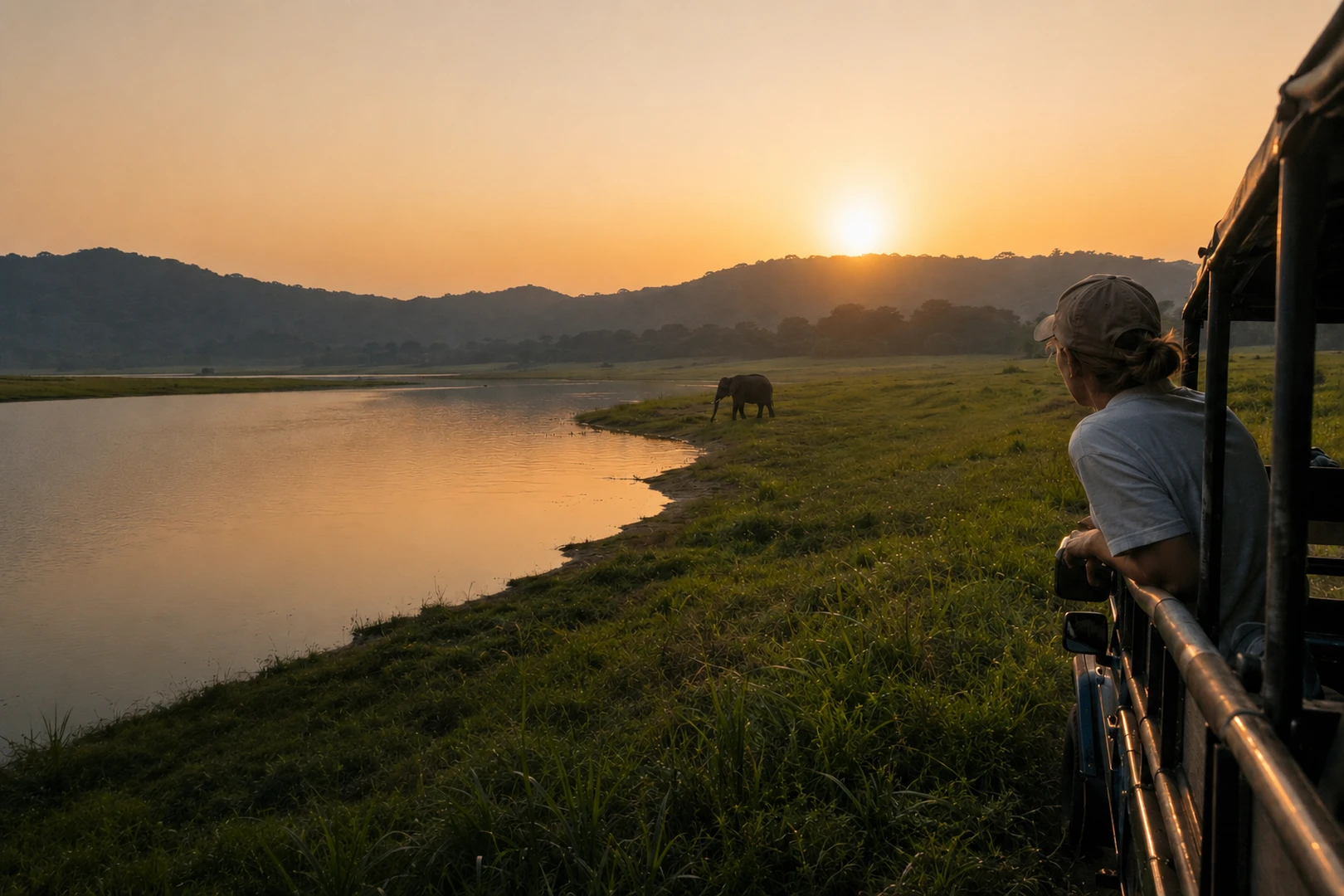
In practice it means spending more time in fewer places. Staying with a moment when it feels right instead of chasing the next one. Sometimes even switching off the engine and just sitting with what's in front of you.
There's no chasing radio calls. No following crowds. And no measuring the safari by how many animals you saw.
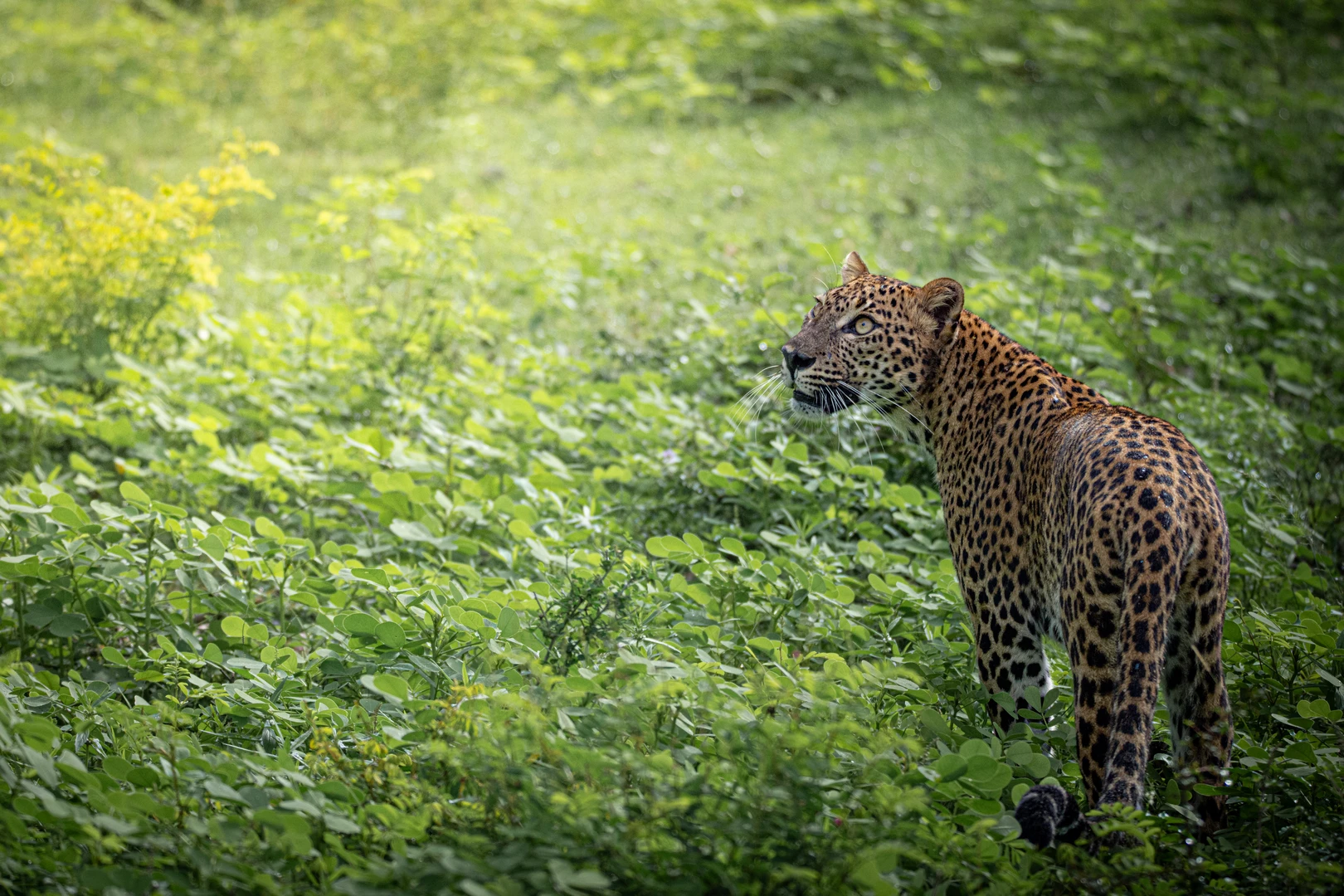
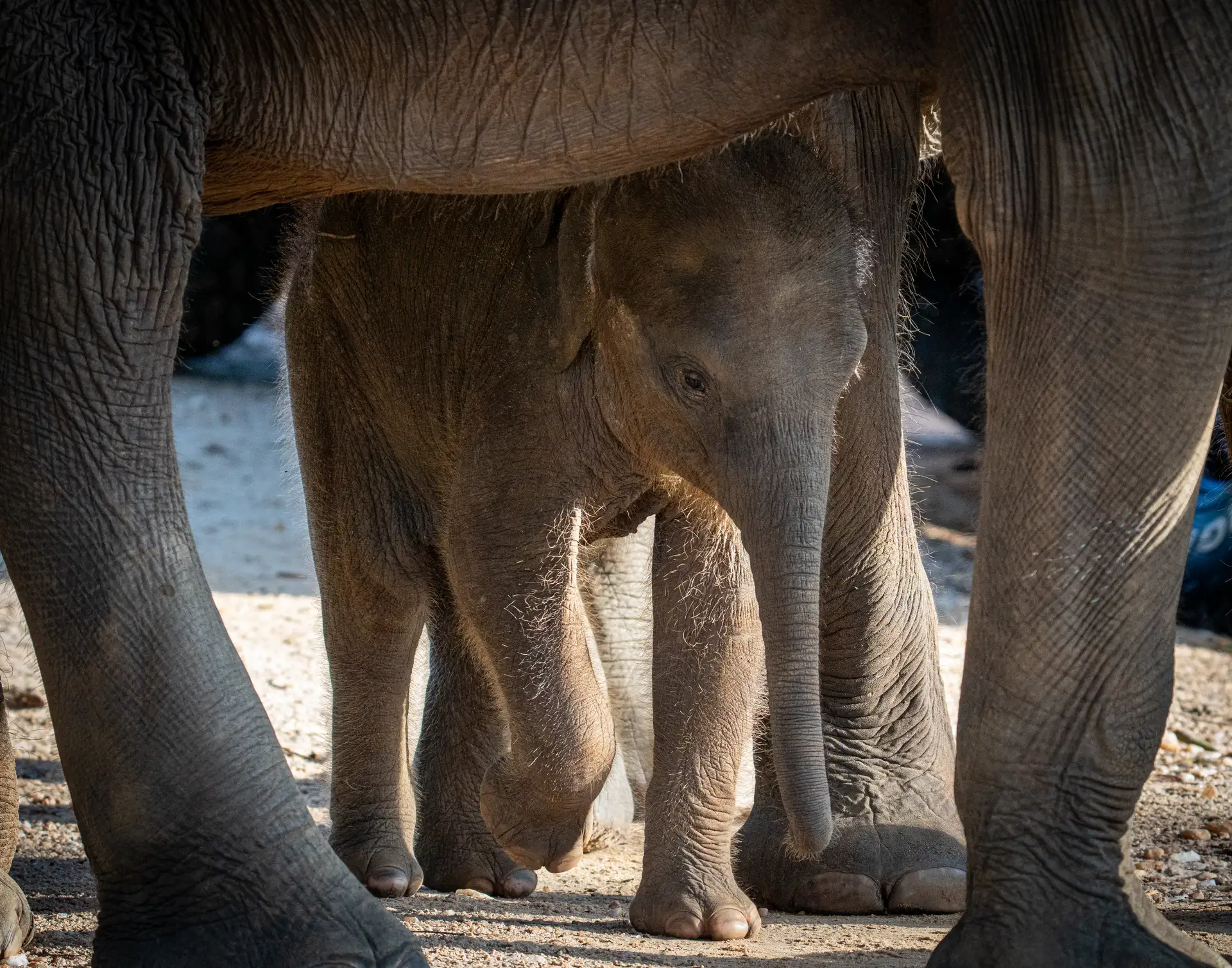
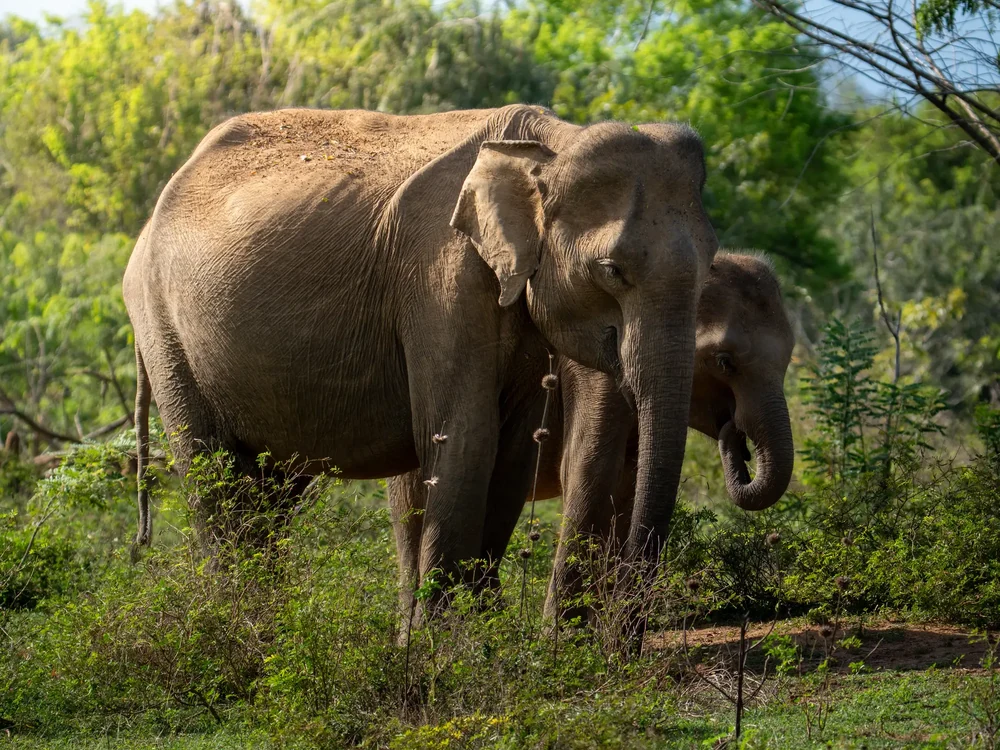
At the start, you still look for the big moments. That's natural. And they do happen sometimes: a leopard crossing in early morning light, elephants moving through the reservoir, a sloth bear appearing quietly at dusk.
But slowly something shifts.
The smaller things begin to stay with you just as much. A lizard warming itself on a rock. An eagle circling above that you only notice when you stop and look up. The sound of the park early in the morning before the heat builds.
That kind of noticing only comes when you give it time.
The places matter too
This way of doing a safari only works because of where you go.
Udawalawe is open and wide. Grassland, water, big skies. Elephants move freely and you don't have to chase them. You find a good spot, you wait, and they come naturally.
Yala Block 5 feels more active. Denser, more unpredictable. Known for leopard and sloth bear, but with fewer vehicles compared to the more famous areas. It still feels alive without feeling crowded.
Yala Block 6 is quieter. Much quieter. If you want to experience a national park with very few other vehicles around, this is one of the best places for that.
Each place has its own rhythm. Instead of just rushing through it, the idea is to move with it.
On wildlife: an honest note
Nothing is staged here. And nothing is ever guaranteed.
Wildlife is unpredictable. That's just how it is, and honestly that's what keeps it real.
Some days you might get that leopard or sloth bear sighting. Many days you don't.
But with this approach, the experience doesn't depend on that one moment. You still enjoy the whole thing: the landscape, the feeling of being inside the park, the quiet, the small things happening around you.
When you take away the pressure to find something, something else starts to happen.
You stop searching all the time. You start actually seeing what's already there.
And that only really happens when you give it a bit of time.
Is a slow safari an ethical safari?
That's not a simple question.
If we are being completely honest, even being inside a national park as visitors raises that question. We are entering their space. Driving through their habitat. However carefully we do it, that part doesn't change. So it's worth asking properly instead of avoiding it.
At the same time, there is another side to this. The communities around these parks depend on what happens here. If tourism creates income, if it supports families, if it helps fund conservation and protects land from being turned into something else, then it plays a role in keeping these places as they are.
So it ends up being about finding a balance. Somewhere between what we take from this and what we leave behind. I believe wildlife must benefit from it more than it costs them.
From our side, the approach is simple. We don't chase animals. We try our best to avoid crowds. We keep a respectful distance and let animals come to us rather than the opposite.
Are we an ethical operator? Honestly, that's not something we can answer for you. It's something you have to feel and decide in your own way.
How it works in practice
All safaris are private. Just your group, your pace.
There are no strangers in the vehicle, no fixed rush, and no pressure to move unless there's a real reason to.
Some moments you stay longer than you normally would, just because it feels right. Other times you move on quietly, not because you have to, but because it feels like the right time.
Nothing is forced. Nothing is timed too tightly. The day isn't measured by how far you go or how many animals you see. It's more about how it feels while you're inside the park.
And the rest is left to the park
It reveals itself in its own time. You just have to be there long enough to notice it.
That's really what a slow safari is. Not a strict method. More a way of approaching time and attention inside a national park.
It won't suit everyone. If you're looking to tick off a list quickly or want guaranteed sightings, this might not be the right fit, and it's better to be honest about that.
But if this feels like something you're looking for, you're always welcome to reach out on WhatsApp and share a bit about your plans. We can take it from there. It would be our pleasure to host you.