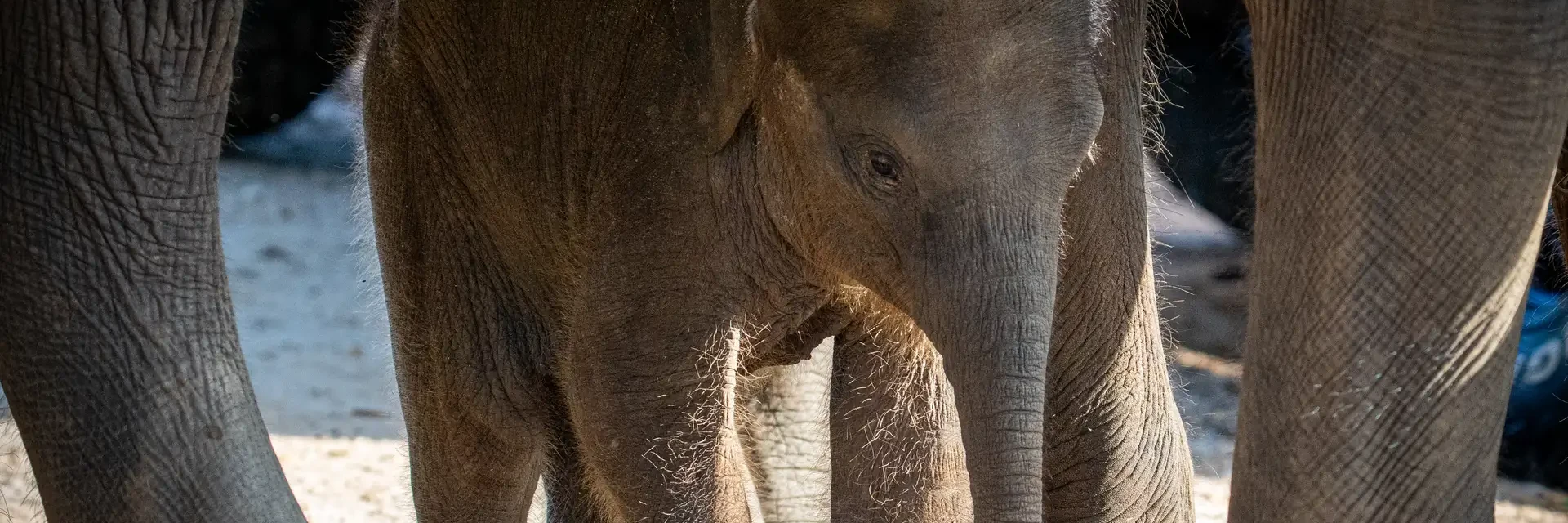
Udawalawe Ethical Safari
Sri Lanka's elephant country. Open grasslands, reliable sightings, and one of the highest elephant densities in Asia.
Guided by Prasanna Gamage, wildlife photographer and naturalist based in Udawalawe
About the park
Open land, open skies, and over 500 wild elephants.
Udawalawe National Park is one of the best places in Sri Lanka, and arguably in all of Asia, to see wild elephants. Unlike the denser forest parks, Udawalawe is mostly open scrubland and grassland. You can see animals from a distance, which means less stress for the wildlife and better sightings for you.
The reservoir at the centre of the park is the heart of everything. Herds come to drink throughout the day. Young calves play at the edge. Painted storks, crocodiles, and water buffalo share the banks. If you sit quietly and wait, the park will come to you.
Honest note: We don't guarantee specific wildlife. No one can. What we do guarantee is that we'll be in the right place at the right time, with someone who understands how to read the park. That's the best anyone can honestly offer.
Park at a glance
The honest picture
What can you actually see in Udawalawe?
Content pending: the sighting-odds table by animal, with your real sighting bands and areas/times from the facts you supplied.
Set expectations right
What you won’t see, and claims to ignore
Content pending: no guaranteed leopards, no “Big Five”, why “almost certain elephants” is honest but still not a guarantee.
Choosing a park
Is Udawalawe worth it? Udawalawe vs Yala vs Minneriya
Content pending: the comparison table (animal odds, jeep counts, landscape, closures), with Yala cells linking to yalaethicalsafari.com.
When to come
When is the best time to visit?
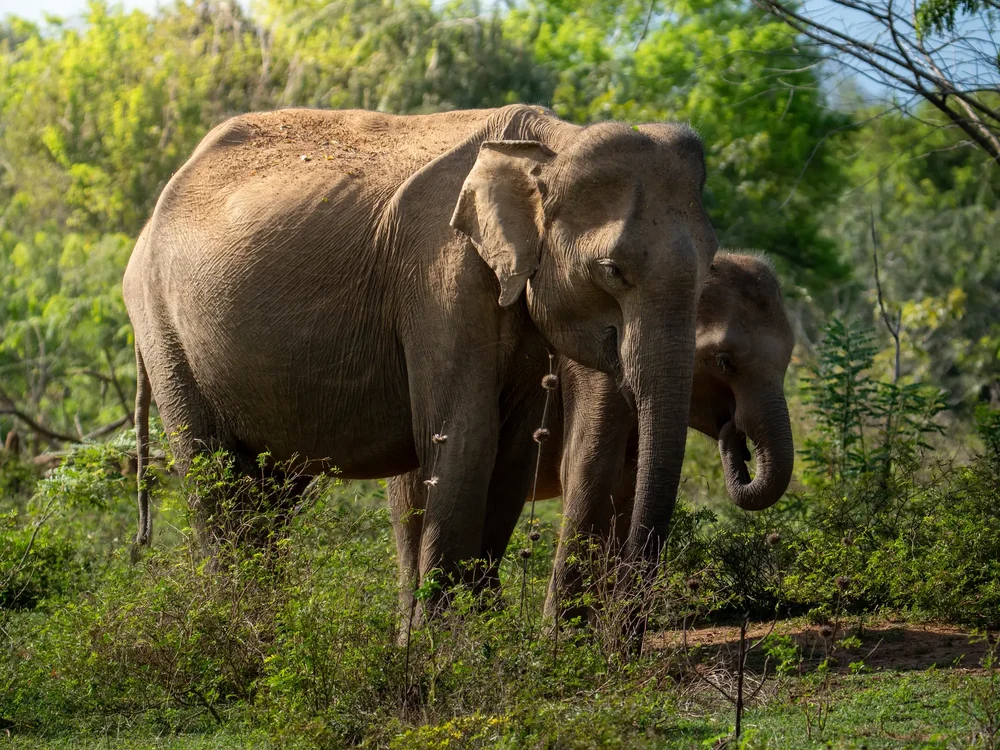
Unlike most parks in Sri Lanka, Udawalawe doesn't really have a bad time to visit. The elephants are here in every season. What changes is the atmosphere, the light, and how many other vehicles you'll share the park with.
Peak season: January to April and July to August. Dry weather, lower grass, clearer sightings. The park is at its busiest during these months.
Monsoon months: The rest of the year. Rain in Sri Lanka's monsoon season is rarely the all-day affair people expect. Most mornings are warm and clear. The rain usually holds off until late afternoon and passes quickly. The park is noticeably less crowded, which is a genuine advantage.
Honest advice: If avoiding crowds matters to you more than perfect dry-season conditions, the quieter months can actually give you a better experience than peak season.
Our approach to timing
Morning, midday or afternoon?
Most safari operators in Udawalawe traditionally run safaris either around 6am or 2pm. Those timings can absolutely work and there is nothing wrong with them at all. But they are also usually the busiest times of the day, with long entrance queues and many jeeps entering the park together at once.
For leopard-focused parks like Yala, that early morning approach can sometimes make more sense. But Udawalawe works a little differently.
Udawalawe is mainly about elephants, and from years of experience inside the park, we've found that elephants here remain active throughout the day, especially around the reservoir areas. Herds spend hours bathing, feeding, drinking and socialising near the water instead of disappearing after the early morning hours.
That is why for the Signature Safari, we often recommend starting around 10am to 11am instead of rushing for first gate entry. The reason is simple: to create the least crowded safari experience realistically possible for guests who value a quieter and more natural atmosphere inside the park.
By then, most of the early safari rush has already cleared, entrance queues are usually gone, and many of the morning jeeps are already finishing their safaris. By the time the afternoon crowd begins entering around 2pm, we're already much deeper inside the park on quieter routes where fewer vehicles are around.
This slower mid-morning approach often creates a more relaxed and natural safari experience, especially for guests who care about avoiding crowds, spending longer at sightings, and observing natural animal behaviour without jeeps constantly surrounding wildlife.
That said, if you prefer a sunrise safari, that can absolutely be arranged. And this flexible timing is mainly part of the Signature Safari. Starter Safari tours usually run on more traditional timings depending on park conditions and daily availability.
How it works
How does a Udawalawe safari actually work?
Content pending: pickup, ticket office, entering the park, in-park rules, exit, by duration (no prices here).
Full pricing by group size lives on the safari packages page, not here — see also the entrance fee article for exact park gate costs.
Getting here
How do you get to Udawalawe?
Content pending: travel-time table from Colombo, Galle, Mirissa, Ella, Tissamaharama, Yala and more, plus bus/tuk-tuk realities.
Where to stay
Where should you stay?
Content pending: area guide (Udawalawe town, day-trip bases) and common accommodation-booking pitfalls to watch for.
What we actually do
What makes a Udawalawe safari ethical?
"Ethical" is a word a lot of operators put on their homepage. We'd rather show you what it actually means when you're sitting in the jeep, because a word on a page is not a guarantee of anything.
We don't drive closer to a herd to get a better angle for guests. Elephants in Udawalawe are generally calm around vehicles that keep their distance and stay still — that calm is what you're actually here to see, and it only holds if we don't push for a closer view.
If another driver radios in a sighting elsewhere in the park, we don't race across to join a cluster of jeeps around it. We assess whether it's worth moving for based on where we already are and what we're already watching, not because every other vehicle is heading there.
We never feed elephants to draw them in, and we cut the engine when watching from close range. Elephants are sensitive to vehicle noise, and a quiet, stationary jeep disturbs a herd far less than guests and guides often realise.
The honest limit: calling a safari ethical describes an operator's intentions and usual behaviour, not a guarantee that applies to every moment of every day. Busy periods in Udawalawe sometimes mean more vehicles than any of us would prefer. What you can judge is whether an operator explains this honestly before you go in, and whether their drivers act consistently with what they claim. We'd rather you judge us on that than on the word "ethical" itself.
A common add-on
The Elephant Transit Home: is it worth it?
Content pending: current feeding times, how long to allow, and an honest view — see also the full article.
Before you go
What to bring
Content pending: the short, honest packing list.
Common questions
Things people usually ask us
Go deeper