Yala Block 5 & 6, 15th October 2025. Guests: Celie and Hannah.
There are days when a safari gives you everything you hoped for.
And there are days when it reminds you why you should never try to control nature. Those days teach you something different. Something harder to explain, but worth more in the end.
This was one of those days.
How it started
A few days before this safari, I got a message from a guest named Celie. She had found my name in a Facebook group where someone had recommended my safaris for being more personal. She was staying in Mirissa and wanted to know if I could arrange something in Yala.
From her first message I could already tell she was someone who cared about doing things the right way. Not the quick in, quick out type. She asked good questions: how I plan the timings, what kind of wildlife we usually see, how I try to avoid the crowds. I explained everything honestly about why I arrange safaris in Yala Block 5 and 6 rather than Block 1, and what that actually means in practice.
A day later she messaged again. She had met another traveller at her hotel, Hannah, who would love to join too. But the safari needed to be the next day because it was Hannah's last day in Sri Lanka. A bit last minute for me, but October is usually quiet, so arranging everything quickly was easy. I called my trusted driver Janitha, confirmed everything was set, and got back to Celie that same afternoon.
October in Yala is something special. The first proper rains had come just days earlier, washing all the dust from the long dry months. The air smells of wet leaves and red earth. The animals come out to feed on the new grass. It is one of my favourite times in the park.
A 2am start
I woke up at 2am to prepare breakfast for the drive. My mother made most of it and I helped. Not sandwiches and bananas like most safari operators hand over. A proper Sri Lankan breakfast: coconut rotti with dhal curry, coconut sambol, and a few other simple things from home. The kind of food that keeps you full and warm during a long morning in the park.
After packing everything, I drove to the meeting point near Thanamalwila on my scooter. About 45 minutes from home. The road was quiet and dark, only crickets and early birds.
By 4:30am I reached the meeting point. Within five minutes I got a message from Celie saying they had arrived too. They were 30 minutes early, which genuinely surprised me. A good surprise. That early start meant we would reach the entrance before most other jeeps.
As we started driving, a faint drizzle touched the windshield and the horizon began glowing orange through the clouds. In Sri Lanka there is a belief that a little rain always brings some luck. I mentioned it to my guests. We were about to find out.
The first sighting before we even entered
Within the first few minutes after turning onto the forest road, the sky began shifting from black to a soft orange. The air was cool and fresh. Quiet except for peacocks calling somewhere far off.
Then I noticed something dark lying across the track about a hundred metres ahead. At first it looked like a tree branch that had fallen overnight. But I kept my eyes on it and saw it move.
I told my guests quietly: "Elephant ahead."
A big bull, standing right in the middle of the road. His whole body dark from the rain, blending almost perfectly with the shadows. Janitha slowed the jeep and we stopped to give him space. For a few seconds he just stood there.
Then he raised his head, flared his ears, and made a short mock charge, just to remind us whose land this was.
Janitha reversed immediately. The elephant stopped, stood for a moment longer, looked at us again, and then moved into the forest with something close to reluctant dignity.
Celie laughed. "I can feel it," she said. "This is going to be a great day."
Inside the park
We entered Block 5 first in line when the gates opened at 6am. Inside, everything felt cleaned and renewed after the rain. Steam rising from the damp ground as sunlight touched the leaves.
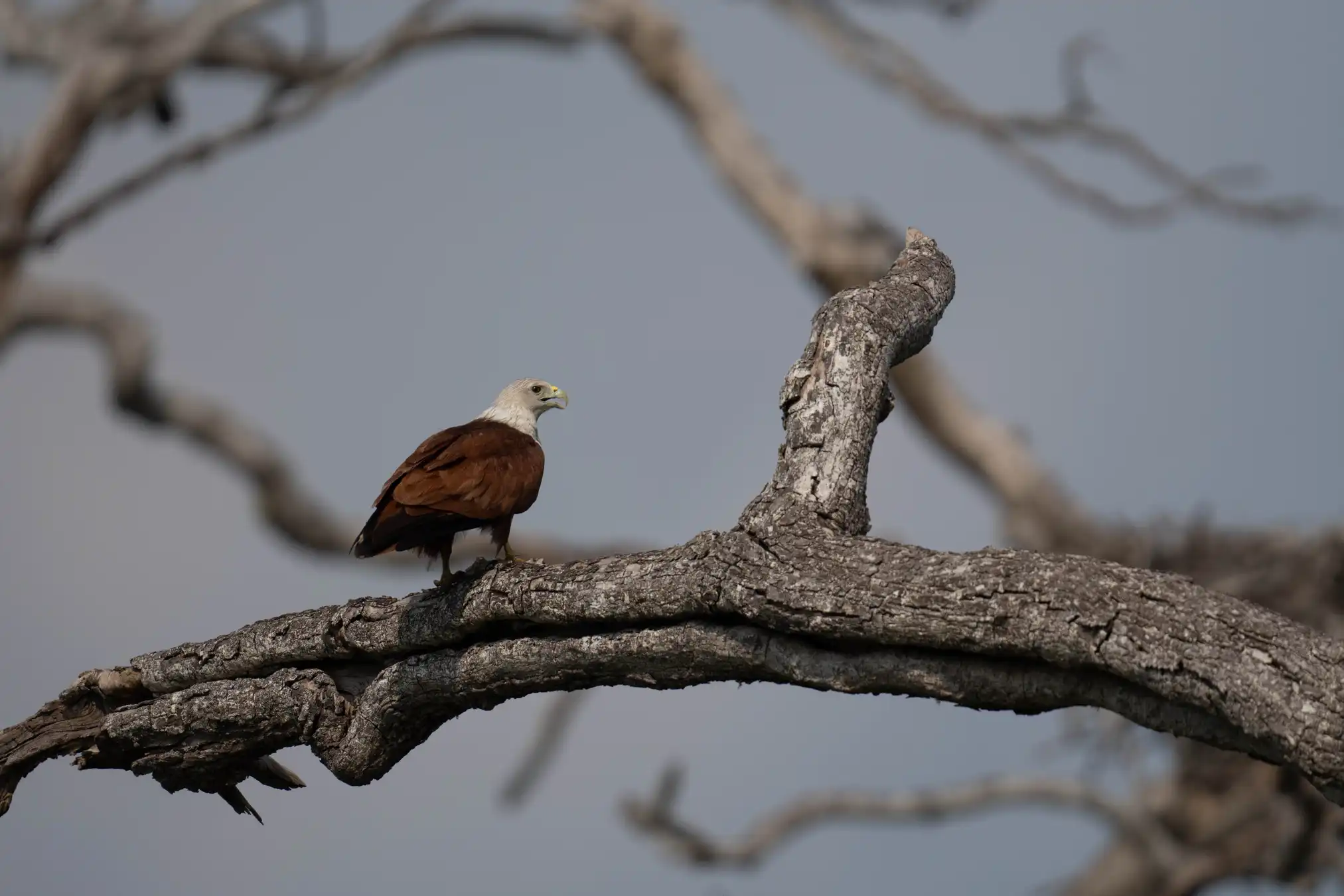
Almost immediately the birds started: a Crested Serpent Eagle scanning the plains from a high branch, a Malabar Pied Hornbill gliding low across the track, grey langurs warming themselves in the upper branches, a White-throated Kingfisher flashing blue as it darted across a puddle.
Hannah was on her first safari ever and fascinated by everything, including the sound of peacocks calling in the distance. We stopped to watch a male peacock displaying in the morning light, tail open like a fan of emeralds and gold. None of the females were paying attention. I told him softly that maybe next time was his moment. He kept dancing anyway.
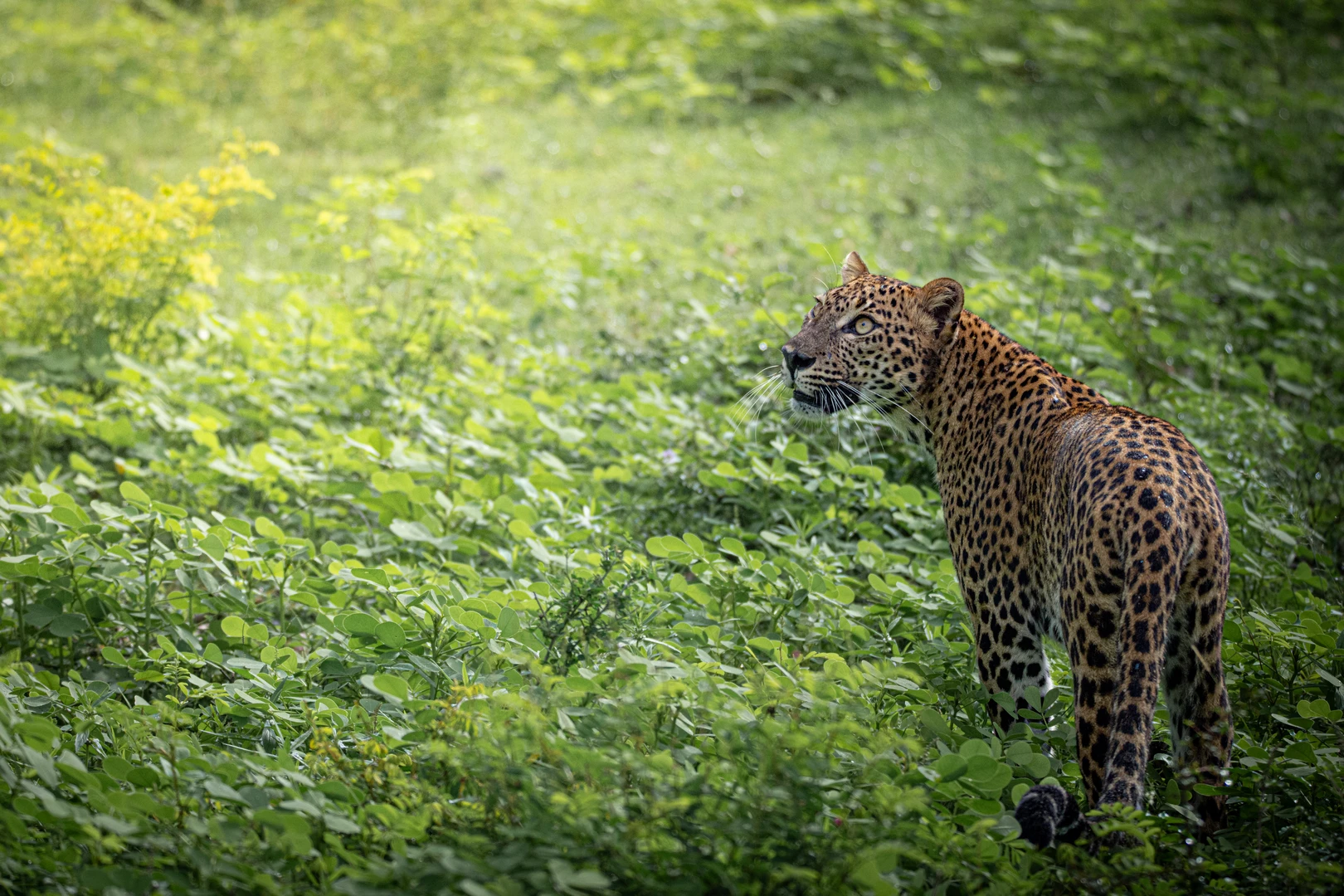
Around 8am, Janitha's phone rang. Another driver had just called to say a female leopard had been seen briefly crossing a small forest road not far from where we were. We drove to the area. As we got closer, we saw a few jeeps already moving away and one still parked, eyes fixed on the thick jungle on both sides.
We stopped a short distance in front of the remaining jeep, engine off. The place was beautiful: tall trees, thick undergrowth, no sound except birds.
After a few minutes, the driver of the other jeep came over and said the leopard had crossed just before we arrived. He saw her for two or three seconds, a flash of golden fur disappearing into the bushes.
We waited quietly for a while, hoping she might re-emerge. She did not. The forest went still again.
That is how real safaris work. Sometimes all you get is a shadow.
The middle of the day
We reached Weheragala Reservoir around 9am, calm like a mirror, eagles gliding above. We set up our small picnic nearby, unpacked the food my mother made, and sat for a while with the sound of wind and water around us.
After breakfast, we drove into Block 6. The difference was noticeable. Wider space, open plains, almost no other jeeps. Not long after entering, Janitha pointed ahead quietly. A huge bull elephant was walking slowly toward us, easily three to four metres tall. Older bulls live alone, wandering without a fixed home. We stayed at a safe distance and watched him cross the road. That slow, unbothered rhythm is what I love about Block 6.
Later we reached Rathmal Wewa, a small lake known locally for its crocodiles. The recent rains had raised the water level just enough that a small stone spillway was releasing water gently to the lower side. Crocodiles wait there because fish get pushed through the current and become easy targets. I counted around 12 to 13 crocodiles of different sizes along the banks and near the shallow pools. A few were juveniles. But some were enormous, easily four metres. Most were lying with their mouths open in that particular way crocodiles have, still and ancient and waiting.
A little further along, Janitha stopped the jeep and pointed at something just below the road. I looked and saw nothing at first. Then suddenly my eyes adjusted: three golden jackals, barely ten metres away, perfectly camouflaged against the dry sand and fallen leaves.
Celie got excited the moment she spotted them. Later she told me she was a huge dog lover, and that seeing anything even remotely related to dogs made her happy. Watching these wild cousins, she said, was the highlight of her day. She could not stop smiling.
The afternoon
By noon, we had seen a stunning Asian Paradise Flycatcher, its long orange tail floating behind it like a ribbon. We reached the Lunugamvehera Reservoir, the largest lake in the area. Across the water, tiny shapes moving slowly in the heat haze. With the binoculars, a herd of elephants.
We sat quietly for a while. No words, no engines, just the sound of wind and egrets calling in the distance.
The end
When we finally drove out of the park, Celie and Hannah said how happy they were. They already understood from the beginning that nature does not work on promises, and that a real safari is not a checklist.
But what stayed with me was something small. I remember the two of them talking quietly to each other, and one of them saying: "Do you feel how fresh the soil and the surroundings smell?"
Most visitors do not notice things like that. True nature lovers do.
When you stop chasing the big thing, you start seeing the small things that actually make the wild beautiful.
Some safaris give you that one famous animal everyone talks about. But then there are other safaris that give you something quieter: something harder to explain.
We did not see the leopard. But we saw the forest breathing again after the rains. The golden light touching the grass. Elephants feeding slowly without a care in the world. Birds calling from every direction. Three jackals dissolving back into the earth. And the smell of wet soil that you do not forget once you have felt it.
Those moments stay longer than a single sighting.
Seeing Celie and Hannah smiling at the end of it all, truly content even without the famous picture everyone hopes for: that meant more to me than any leopard sighting ever could.
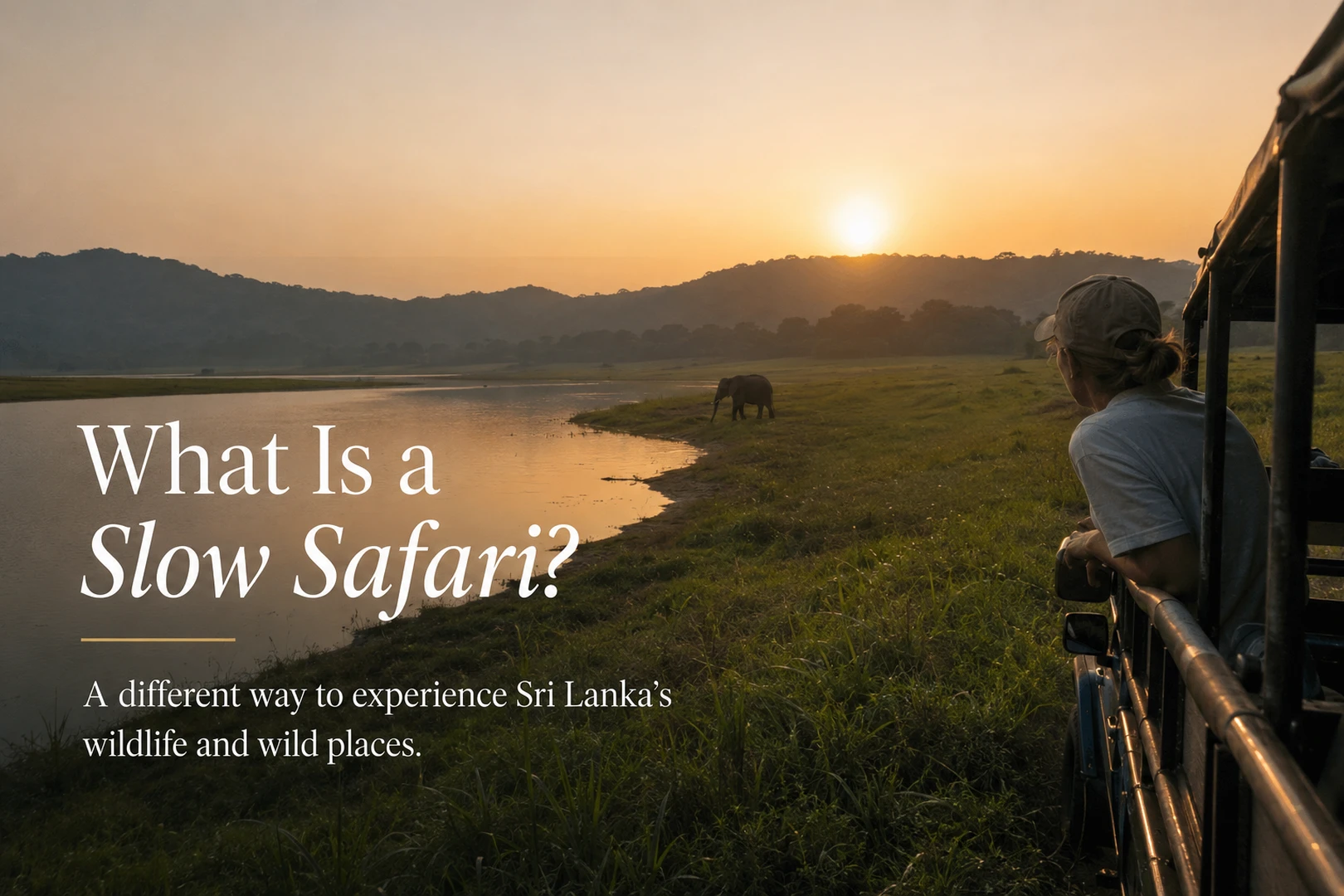
This is what a slow safari actually is.