Udawalawe is the park I know best. I live near it, I guide in it regularly, and I have watched it change through seasons and years. So this is not a generic overview. This is what I actually know from being inside it.
What Udawalawe is
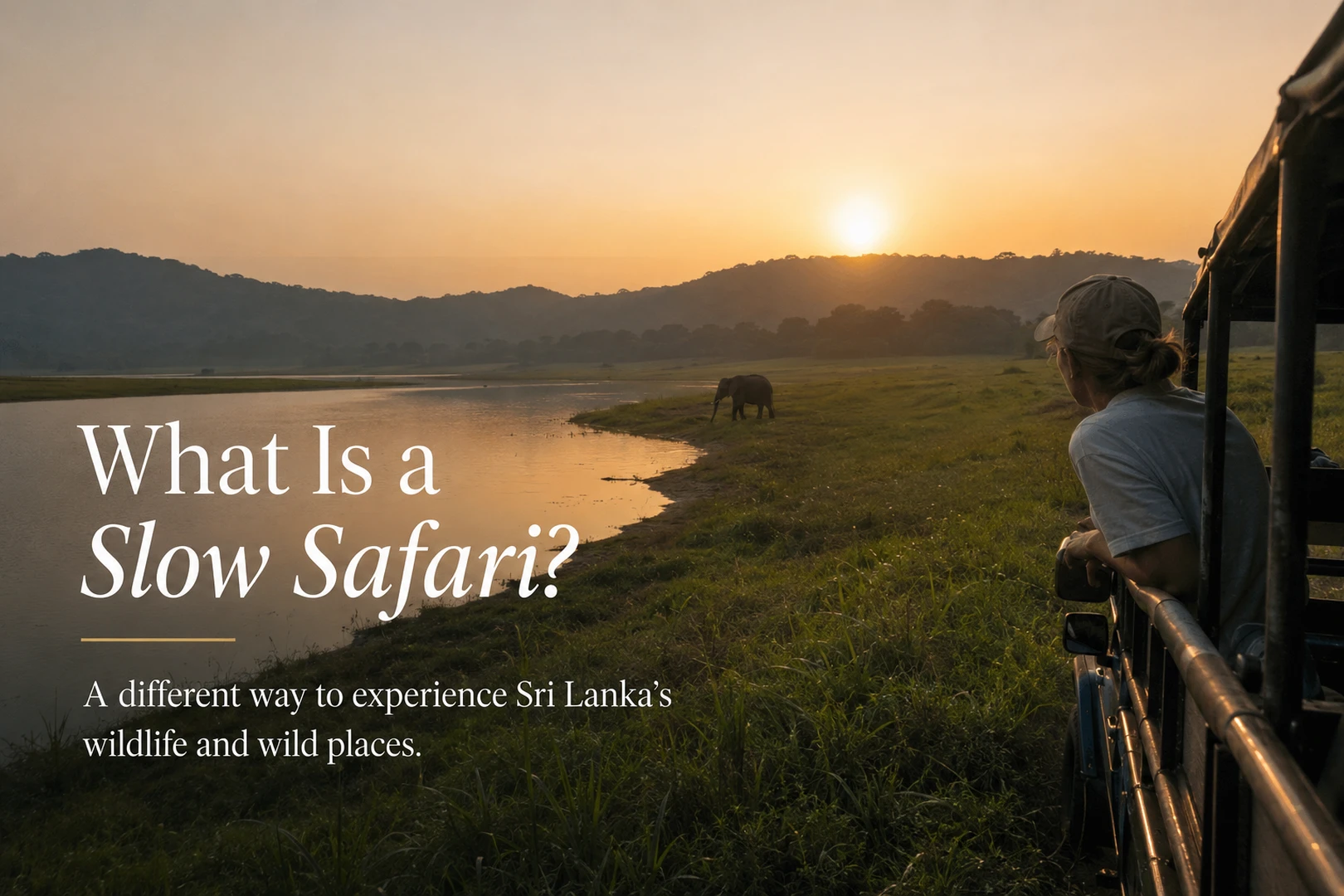
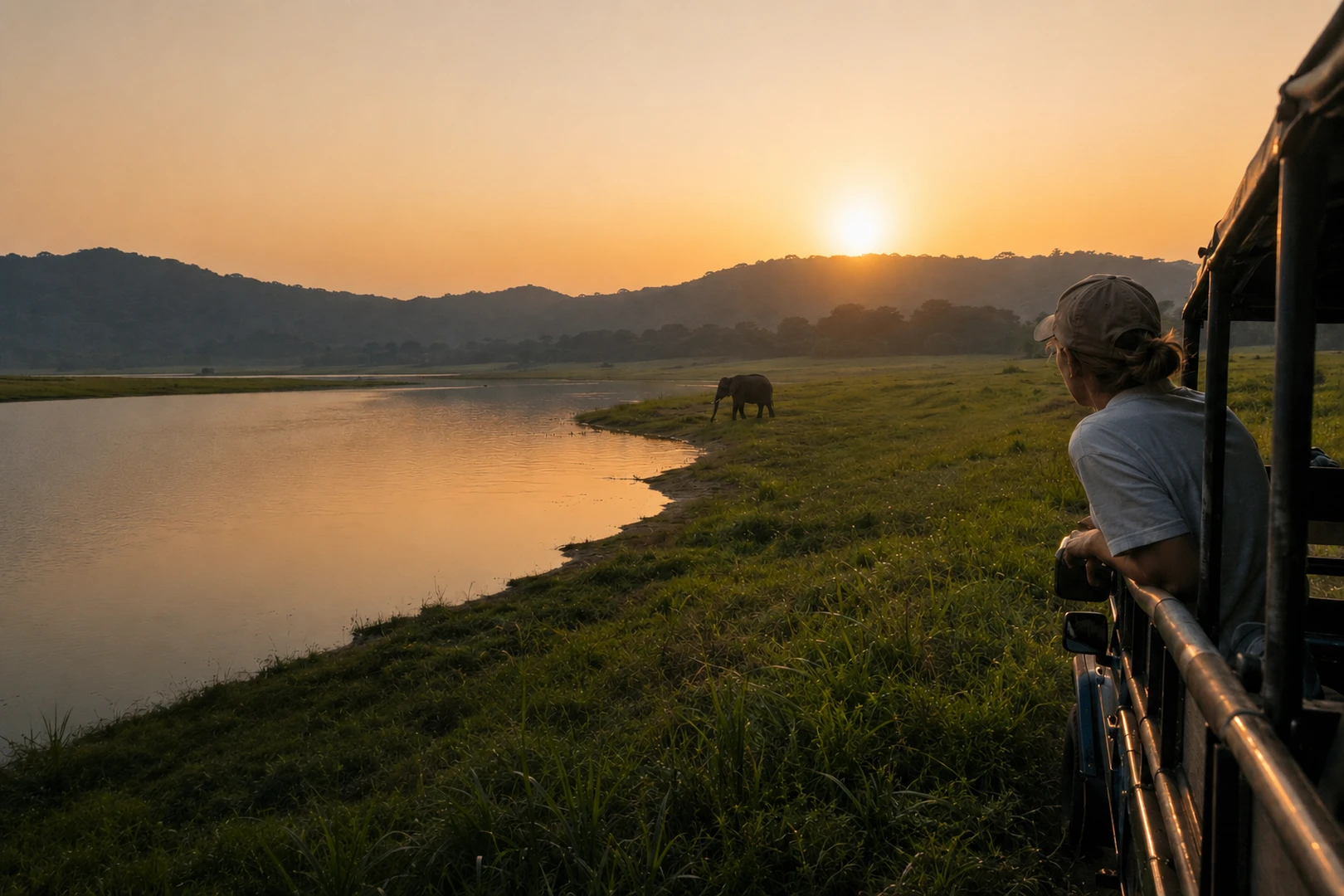
Udawalawe National Park sits in the south-central lowlands of Sri Lanka, covering around 30,000 hectares. The landscape is dominated by the Udawalawe Reservoir, a large body of water surrounded by open grasslands, scrub forest, and wetlands. Compared to the dense, forested parks of the north and west, Udawalawe feels open and wide. That openness is why the wildlife is so easy to spot.
The park is not enormous by Sri Lankan standards. This is actually an advantage. You can cover it meaningfully in a half-day, which makes it accessible for travellers with limited time.
What you will see
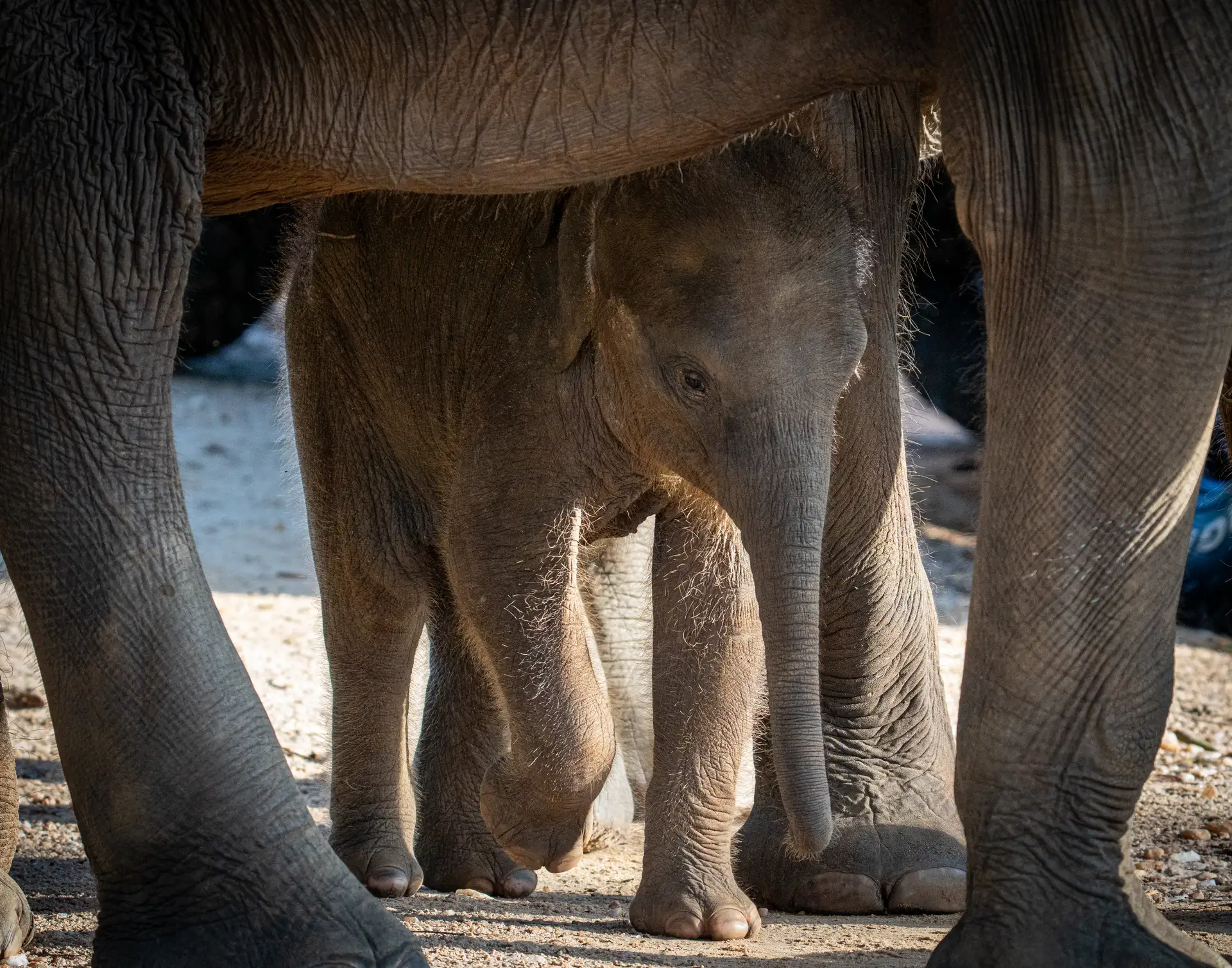
Elephants first, because that is what Udawalawe is known for, and the reputation is earned. This is one of the most reliable places in the world to see wild elephants. Not occasionally. Consistently. Most safaris here result in multiple elephant sightings, often including family groups with young calves.
What makes Udawalawe special for elephants is not just the numbers but the behaviour. Because the park is open and the reservoir is central, you often watch elephants doing things over an extended period rather than just catching a glimpse as they move through trees. Bathing, drinking, feeding, young bulls mock-charging each other, mothers moving small calves away from perceived threats. You can sit with these moments in a way that denser parks rarely allow.
Beyond elephants, the park has a good variety of other animals. Water buffalo are extremely common, often in large groups resting in or near water. Spotted deer and sambar deer are everywhere. Crocodiles line the reservoir edges and smaller lakes. Golden jackals are regularly seen crossing the open tracks. Monitor lizards are common.
The birdlife is genuinely outstanding and deserves more attention than it usually gets. The wetlands around the reservoir attract painted storks, pelicans, purple herons, great white egrets, and spoonbills. Eagles are constant presences overhead: crested serpent eagles, changeable hawk-eagles, and the impressive white-bellied sea eagle. Green bee-eaters flash past on every track. Sri Lanka junglefowl call from the forest edges from dawn.
The honest truth about leopards
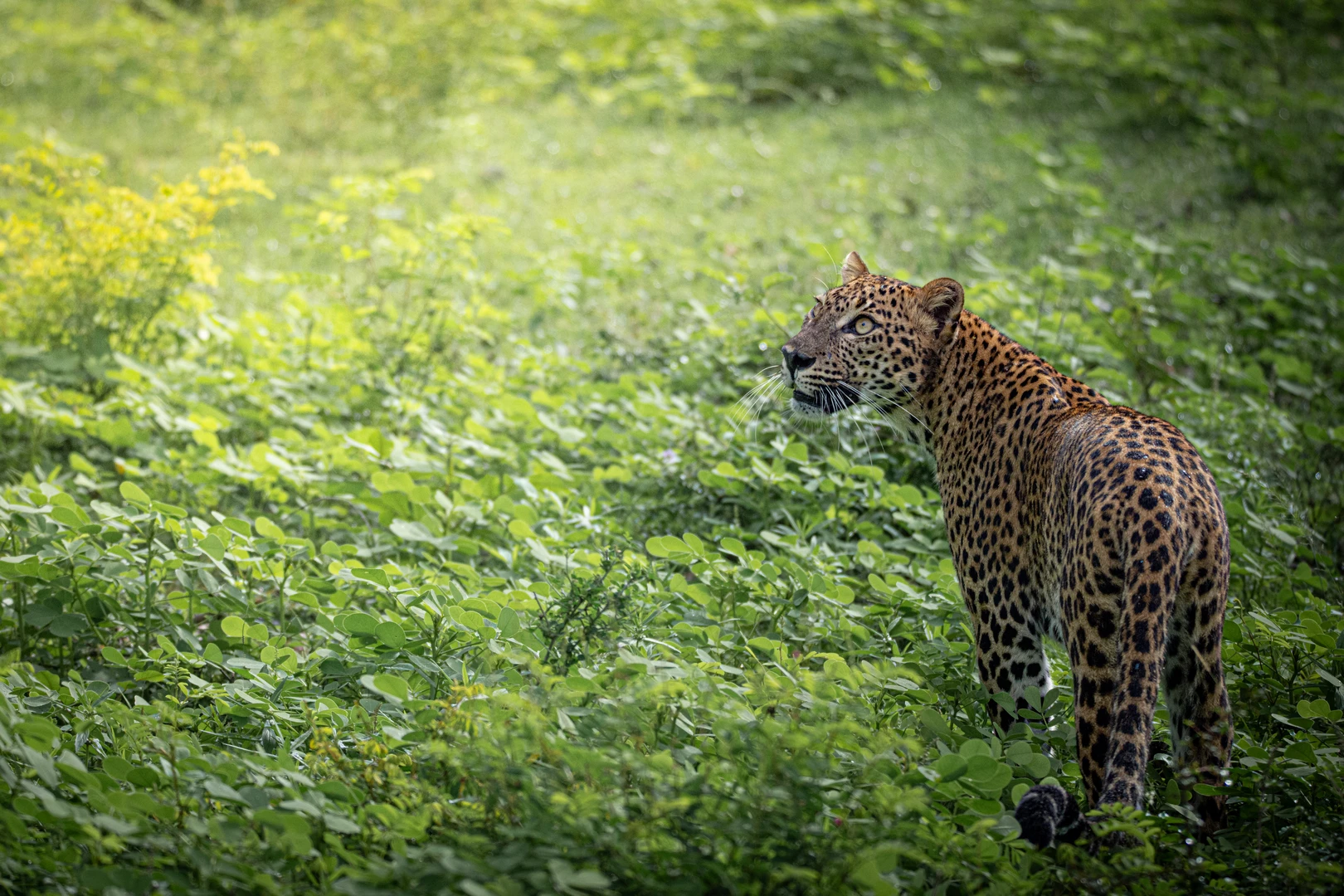
Leopards live in Udawalawe. I want to say that clearly, because some guides skip past it entirely. They exist here.
But sightings are rare. Genuinely rare. Only a small number of confirmed leopard sightings are reported from Udawalawe in a typical year. The open grassland habitat is not where leopards prefer to be, and the population here is much smaller than in Yala or Wilpattu.
If you come to Udawalawe hoping for a leopard and make it the measure of your safari, you will almost certainly be disappointed. Come for the elephants. If a leopard appears, consider it an extraordinary piece of luck. That is the honest framing.
How long do you need?
A half-day safari of four to five hours is ideal for Udawalawe. Morning sessions (6am to around 10-11am) or afternoon sessions (around 2:30-3pm to 6pm) both work well. Mornings are better for photography, cooler temperatures, and elephant activity. Afternoons are quieter in terms of other jeeps and the sunset light can be stunning.
A full-day safari in Udawalawe is possible but tends to feel long. The park becomes very quiet during the middle of the day, and unless you have a specific reason to stay, most visitors feel satisfied by a half-day. If you want a full day's wildlife experience and have more time, I would suggest splitting between Udawalawe in the morning and combining with the Elephant Transit Home visit, which is just outside the park boundary.
The Elephant Transit Home
This is a rehabilitation centre for orphaned elephant calves run by the Department of Wildlife Conservation, located a short drive from the main park entrance. Feeding sessions are open to visitors and take place multiple times a day. You watch from a distance while young calves are fed formula milk. It is not a zoo and you cannot touch the elephants. The purpose is to prepare these animals for eventual release back into the wild.
I have written a separate, more detailed article about the ETH, including the context behind things that sometimes confuse visitors. Worth reading before you go.
Getting to Udawalawe
The town of Udawalawe is accessible from Colombo (roughly 4 hours), from the south coast beaches at Mirissa or Weligama (roughly 2 to 2.5 hours), and from Ella (roughly 2 hours). The road from Ella through Wellawaya and up to the park is a beautiful drive in its own right.
Staying in Udawalawe town the night before gives you the easiest early start. Several small guesthouses and hotels in the area can arrange safari jeeps directly. Alternatively, booking through an operator in advance and having them arrange pickup from wherever you are staying along the south coast is a clean way to do it.