I have had elephants charge at the vehicle I was in more times than I can count precisely. Most were mock charges. A few were something closer to real. The difference between them is something you learn to read over time.
Understanding why elephants charge, and how to distinguish between a mock charge and a real one, is genuinely useful information for anyone spending time around wild elephants in Sri Lanka.
Why elephants charge
Elephants do not charge randomly. There is almost always a trigger.
The most common reason is feeling threatened or surprised. An elephant that hears or smells you before it sees you, and then suddenly realises you are very close, will often charge as a defensive response. This is why making noise, especially with a vehicle engine, is actually protective. Elephants that know you are coming from a distance have time to move away rather than feeling cornered.
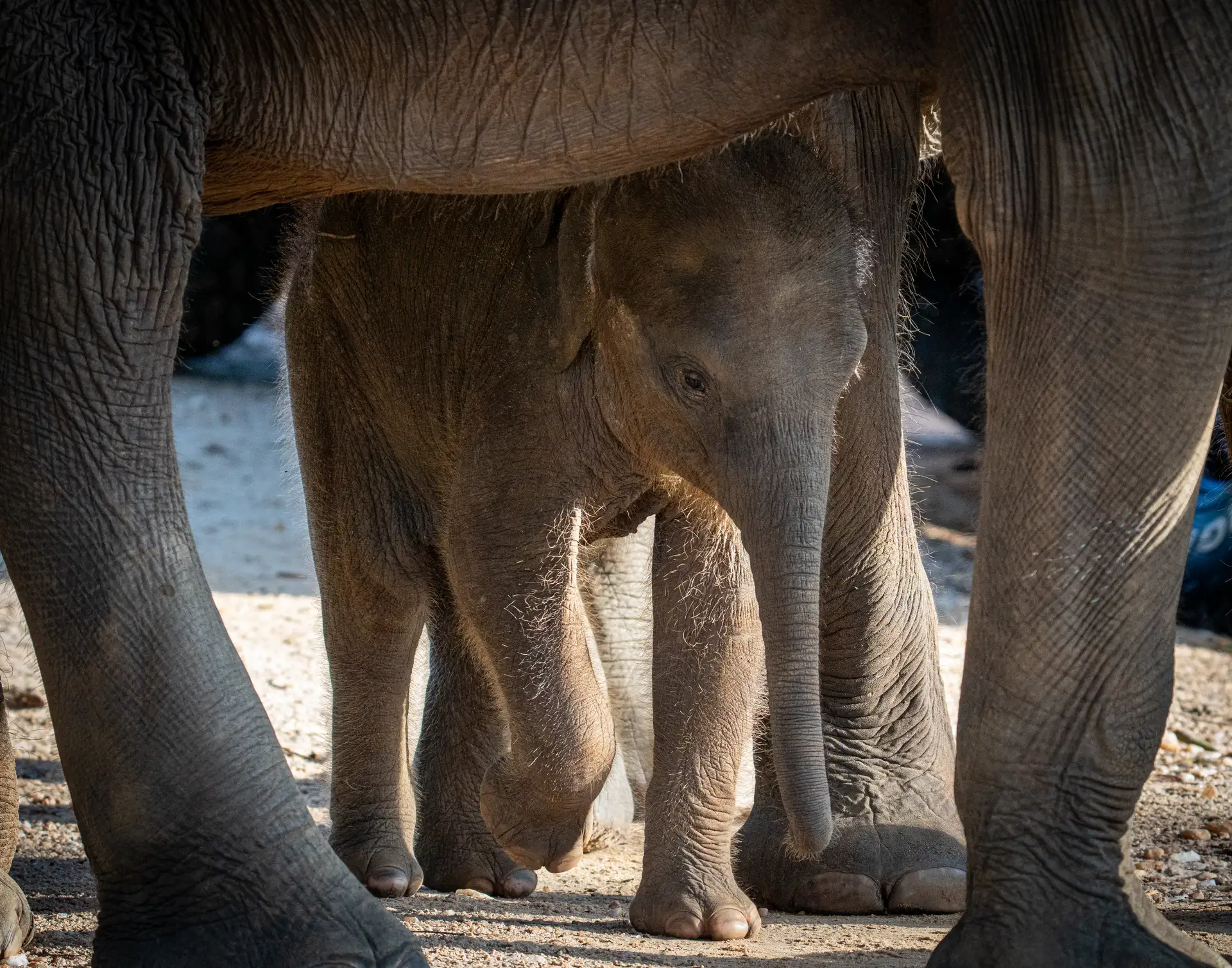
Protecting calves is another major trigger. A mother elephant with a young calf is one of the most reliably dangerous situations in wildlife. She will not wait to assess your intentions. If she perceives any threat to her calf, she responds immediately and aggressively. The same applies to other females in a family group around a newborn.
Males in musth, the periodic hormonal state I have written about separately, are reactive to almost anything they perceive as a challenge. They do not need a specific trigger the way a mother protecting a calf does. They are in a state where their threshold for aggression is simply very low.
Habituated elephants, particularly those that have been fed by humans, sometimes charge in the expectation of food when none appears. This is one of the reasons feeding wild elephants is genuinely dangerous, not just to you but to the next person who encounters that animal.
Mock charges versus real charges
A mock charge is a warning. The elephant is telling you to back off.
In a mock charge, the ears are spread wide, the head is held high, and the elephant often stops short of the vehicle or person. Sometimes there is a lot of noise, trumpeting, branch-breaking, ground-stamping. The elephant may turn sideways, which is actually a further display. All of this is communication. The elephant is giving you a chance to respond correctly before escalating.
A real charge looks different. The ears are pinned back against the body, the head is lower, and the animal is accelerating throughout. There is often less noise, which sounds counterintuitive. A silent elephant with ears back and head down, moving steadily toward you, is the situation that requires immediate action.
Most charges from elephants in Sri Lanka, in my experience, are mock charges. The animal is communicating, not attacking. Responding correctly to the mock charge, backing away slowly, reducing engine noise, giving space, almost always resolves the situation.
What to do
In a vehicle: do not accelerate directly away in a panic. Sudden fast movement can escalate a mock charge into something more serious. Back away slowly and give the elephant space. Turn off the engine if the elephant has stopped and is watching. Reduce noise.
On foot: do not run. Running triggers chase behaviour. Back away slowly while keeping the animal in sight. Do not turn your back. If there is a tree, vehicle, or wall available, put it between you and the elephant. Keep moving until you are well out of the situation.
Do not make direct eye contact for extended periods. In elephant body language this can read as a challenge.
Do not make sudden loud sounds. A horn blared suddenly at a charging elephant is as likely to escalate the situation as defuse it.
The thing that actually protects you
Most incidents between humans and elephants in Sri Lanka happen because a person did not know the elephant was there. Walking at night near forest edges, on paths through paddy fields, along rural roads that pass through elephant corridors, without light and without awareness of elephant movement in the area.
The elephants that kill people in Sri Lanka are almost never doing so because they are inherently aggressive. They are almost always defending themselves or their young from a surprise encounter at close range.
Distance and awareness are the two things that actually protect you. Both are achievable with the right information before you go.