I was not planning to write this. But after seeing a video from a tourist family who were genuinely shocked at how little this is talked about, I felt it needed to be said somewhere clearly.
Two deaths from wild elephant attacks in the same small area near Sigiriya within two weeks. Neither incident made it into the travel blogs, the popular vlogs, or the hotel briefings that guests receive before early morning hikes. The silence around this is not malicious. People do not want to scare tourists, or make Sri Lanka look unsafe. But that silence does more harm than good.
If you are visiting Sri Lanka and plan to hike early, walk between hotels at night, or travel along rural roads near forest areas, this is something worth knowing.
Where this happens
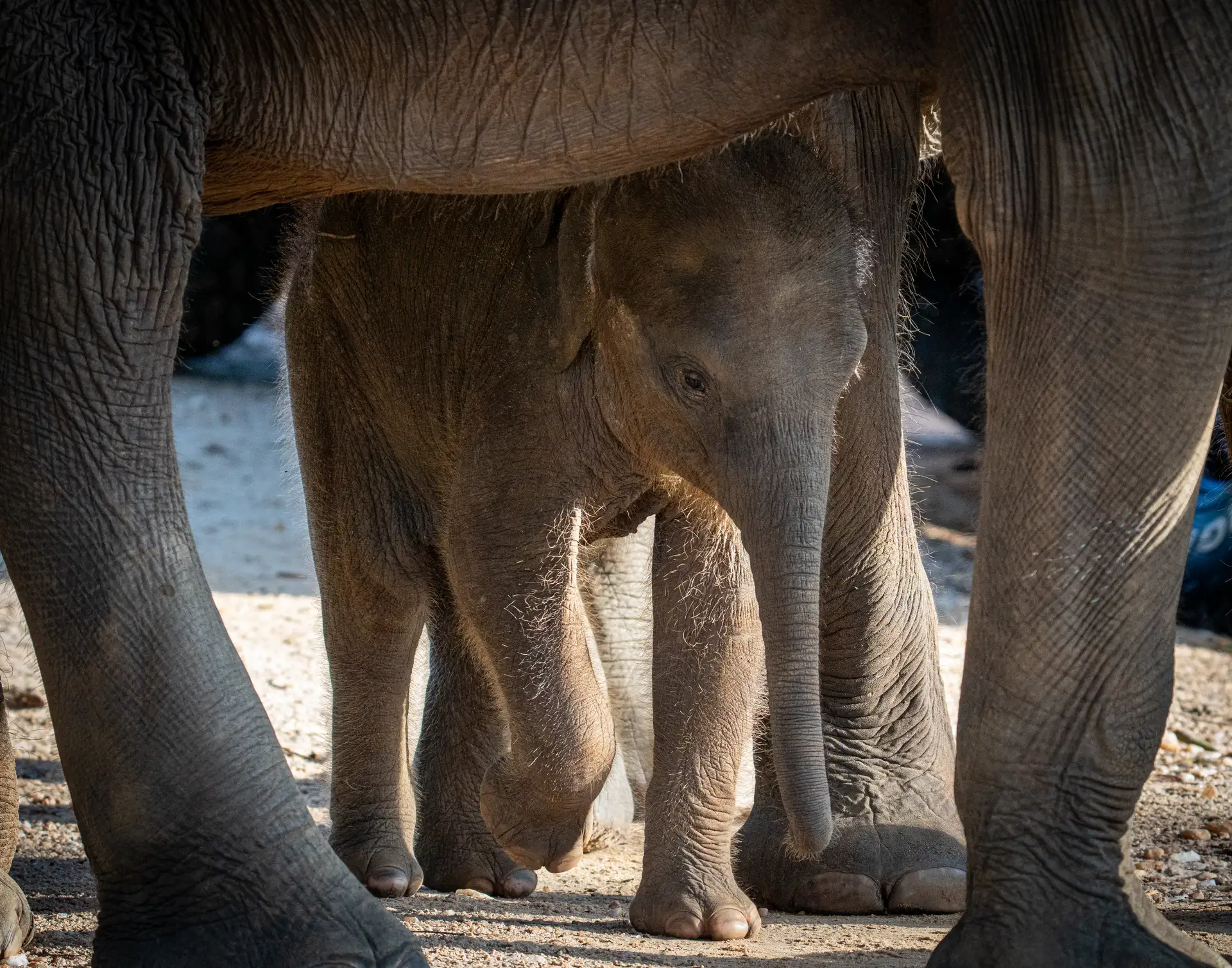
Sri Lanka has around 6,000 wild elephants. They do not stay inside national parks. They move across the whole island, following ancient migration corridors that long predate the roads and villages built through them.
Places like Sigiriya, Arugam Bay, Wasgamuwa, Minneriya, Anuradhapura, Kataragama, and the route between Kataragama and Buttala through Yala are all areas where wild elephants regularly move through or near human settlements. The small roads leading into these villages are often narrow, unlit, and bordered by forest. At night, or in the early morning before sunrise, you genuinely cannot see what is ahead of you until you are very close to it.
The roads themselves are beautiful in daylight. In the dark, you have no warning.
Why elephants come into villages
This is not random. It is happening because elephants are losing their habitat. Their ancient migration routes now pass through farmland, villages, and tourist areas. When dry season arrives and natural water sources shrink, they come closer to human settlements looking for food and water.
This is what is called the human-elephant conflict. It is not about aggressive animals. It is about animals doing exactly what they have always done, moving through land that now has people on it.
Feeding wild elephants makes this dramatically worse. I have watched it happen on roads near Yala, near Sigiriya, near Arugam Bay. Tourists stop their tuk-tuks, reach out with a banana or a piece of fruit, and genuinely believe they are being kind. They are not.
Feeding a wild elephant teaches it to associate humans with food. Once that happens, the elephant begins approaching vehicles and people expecting to be fed. When the food does not appear, the situation becomes unpredictable and dangerous. Many elephant attacks on vehicles happen because an animal has been conditioned to approach humans and then feels threatened when the interaction does not go as expected.
Beyond the safety issue, feeding elephants disrupts their digestive systems. Wild elephants eat a specific diet of bark, grass, leaves, and roots. Fruit in large quantities causes serious health problems over time.
Male elephants in musth
There is something specific about male elephants that most tourists do not know, and it is important.
Adult male elephants live mostly alone. They leave the herd when they reach maturity and wander independently. Periodically, they go through a condition called musth, a hormonal phase where testosterone levels spike dramatically. During musth, a male elephant becomes highly aggressive, easily agitated, and extremely dangerous.
You can sometimes identify a male in musth by the temporal glands behind his eyes: they leak a dark fluid and the area appears wet. His behaviour will also tell you. He moves with a different kind of purpose. He does not need a reason to charge.
A male elephant in musth is not curious about you. He is not performing for the camera. He is one of the most powerful land animals on earth in a hormonal state that makes him reactive to almost any perceived threat.
How to stay safe
None of this is meant to frighten you away from Sri Lanka. The country is safe for tourists, and the vast majority of visits involve no wildlife danger whatsoever. But awareness is not the same as fear.
A few things that actually help:
Ask your accommodation whether there are elephants moving near the area at night or early morning. Local guesthouse owners almost always know.
Do not walk alone in darkness near forest edges, paddy fields, or known elephant corridors. This applies to early morning hikes to attractions like Sigiriya's Lion Rock.
If you encounter a wild elephant on a road, stop at a safe distance and wait. Turn off bright lights if possible. Do not honk. Do not try to drive around the animal. Let it move in its own time.
If you are on a scooter or tuk-tuk and an elephant appears nearby, stop. Do not accelerate past it. The movement and noise of a vehicle trying to pass can trigger a charge.
Never feed a wild elephant, no matter how calm it appears.
Feeding wild elephants is not kindness. It is cruelty in disguise.
The deeper picture
Every year, dozens of elephants are killed in Sri Lanka. Some are shot by farmers protecting their crops. Some are electrocuted by illegal fences. And in return, elephants kill people: farmers walking home from their fields, villagers going to the well, tourists who did not know what to expect.
This is a real crisis with no simple solution. The communities living next to these parks carry the heaviest cost of it, often invisibly.
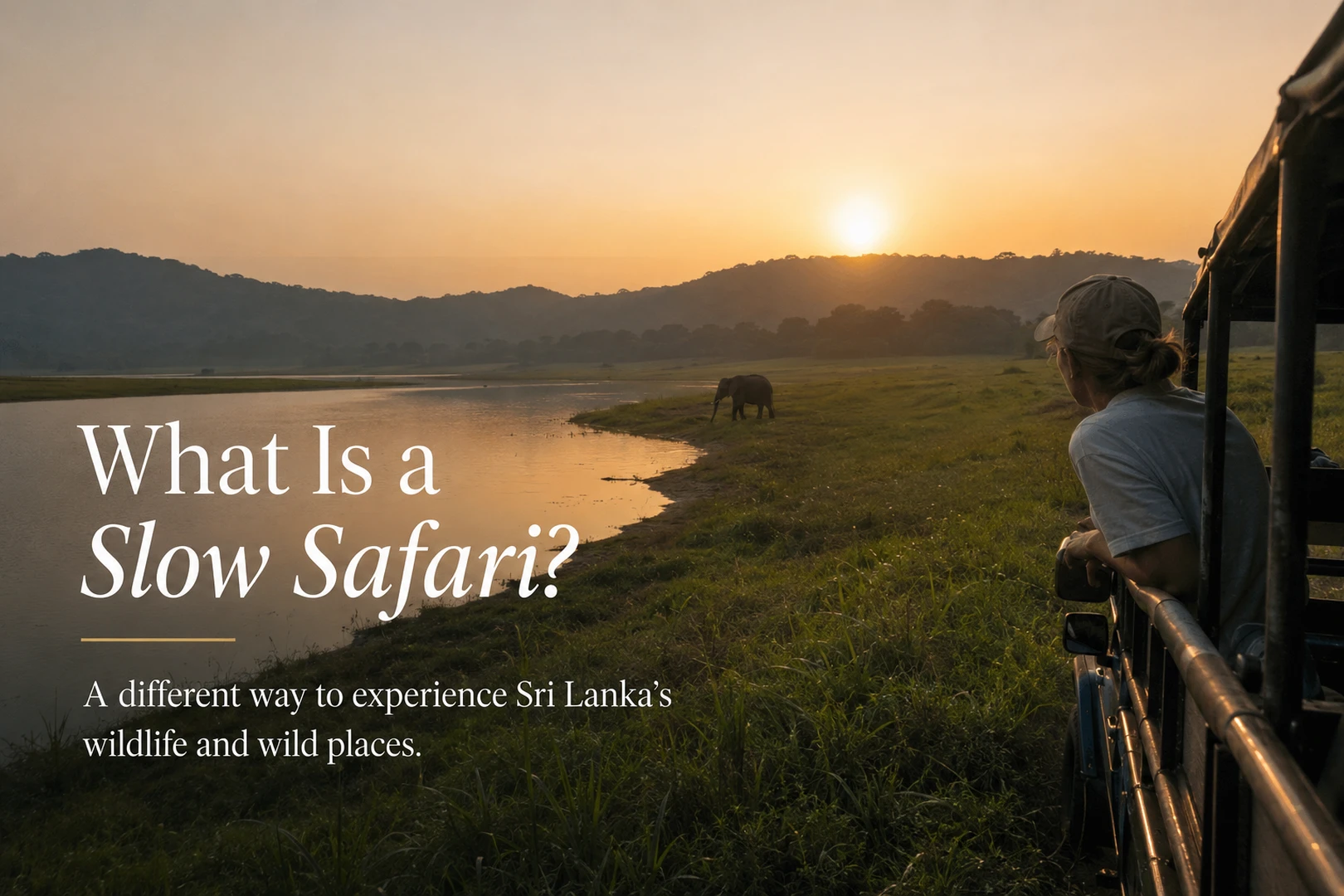
If you want to see elephants and do it properly, there is a way to do it. A safari inside a national park, with an experienced guide, in a proper vehicle, at a safe and respectful distance. The experience is genuinely better than a roadside encounter, not just safer.
The wild is real here. That is what makes Sri Lanka so extraordinary to visit. But the wild works on its own terms, not ours.